
Using Science as the Backbone of Your Homeschool
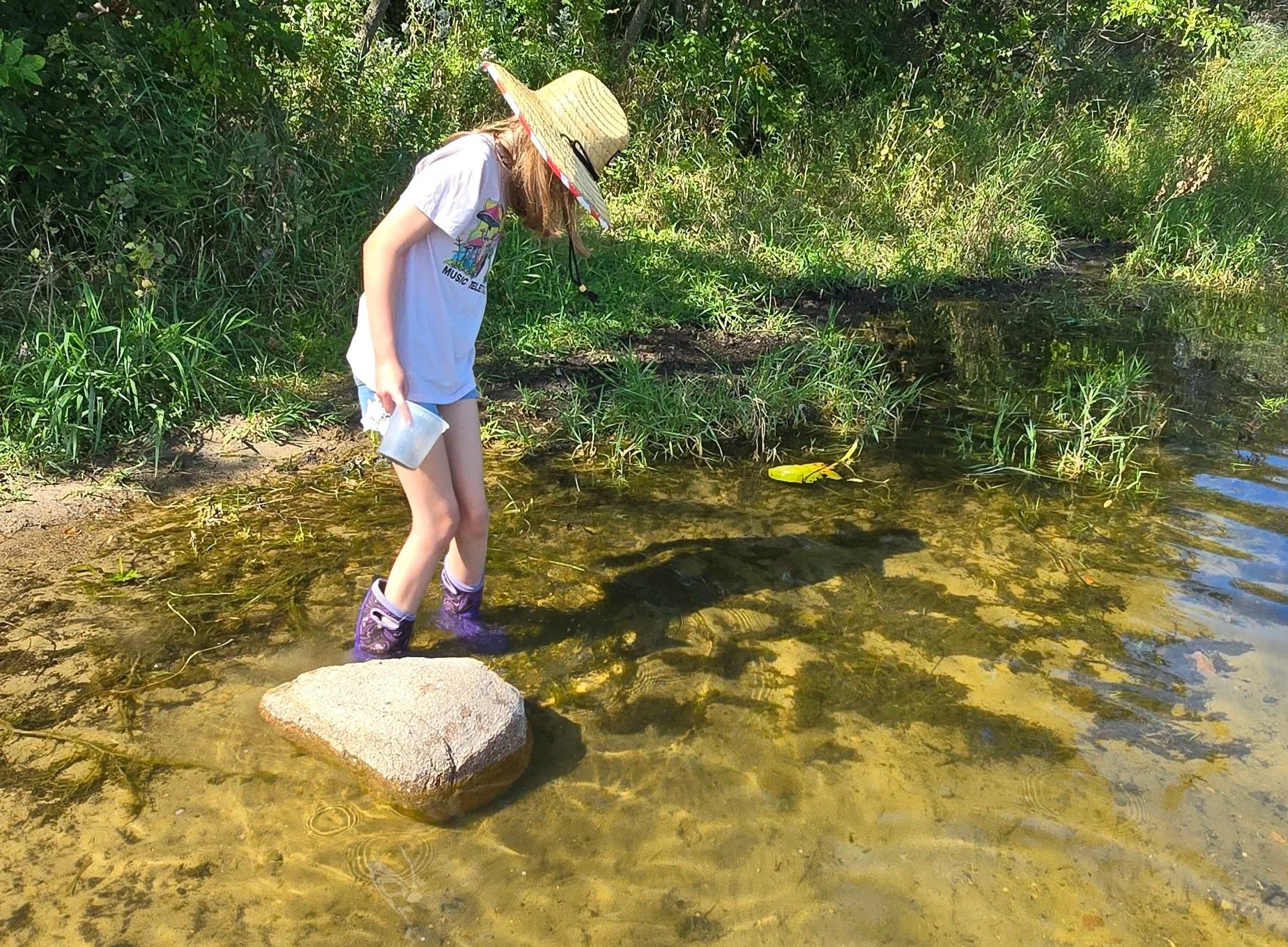
My daughter’s favorite subject has been and always will be science. She loves watching Youtube videos on the most random science concepts and learning as much as she can. We have 4 different science curriculums that we pull from for the past 2 years. Earth Science, Oceanography, Astronomy, and Human Anatomy. When she was younger, she hated writing and doing copywork. The way I got around that was by printing off interested science facts that she had to copy in her notebook. That totally worked! She learned about pistol shrimp and the eyes of squids just by copying the information. That brought me to think if you could do science that covers all the other subjects as well.
What if one simple science activity could naturally cover reading, writing, math, history, and even social studies, all at once?
For younger elementary homeschoolers, science can become the anchor that ties everything together. Not in a rigid, checklist-heavy way. But in a hands-on, curiosity-driven rhythm that actually makes learning stick.
And the best part? It often feels less like school… and more like real life.
Why Science Works So Well in the Early Years
Young kids are naturally wired for science.
They’re constantly:
Asking questions
Testing ideas
Observing the world
Getting their hands messy
Science doesn’t feel like a “subject” to them. but rather it feels like exploration.
When you build your homeschool around that curiosity, something shifts:
Resistance goes down
Engagement goes way up
Learning becomes connected instead of fragmented
The Big Idea: One Topic, All Subjects
Instead of teaching subjects in isolation, you can use a single science topic as a springboard for everything else.
Let’s say your topic is plants.
Here’s how that one theme can cover your entire homeschool day:
Science
Plant seeds and observe growth
Learn about roots, stems, and leaves
Experiment with sunlight vs. shade
Track watering and results
Hands-on, simple, and memorable.
Reading
Read books about plants, gardens, or farming
Practice phonics using plant-related words
Follow simple instructions for planting
Reading suddenly has a purpose.
Writing
Keep a plant journal
Draw and label diagrams
Write simple observations (“My plant is 2 inches tall”)
Create a short story about a seed growing
Even reluctant writers tend to engage when it’s tied to something real.
Math
Measure plant growth (inches, centimeters)
Count seeds and leaves
Create simple charts or graphs
Compare which plant grew faster
Math becomes visual and meaningful—not just numbers on a page.
History & Social Studies
Learn how early farmers grew food
Talk about where different plants come from
Explore how communities depend on agriculture
Discuss seasons and how they affect crops
Now you’re connecting your child to the bigger world.
Art & Creativity
Draw plants at different stages
Press flowers
Paint garden scenes
Build a pretend garden from recycled materials
This reinforces learning in a way worksheets never could.
Real-Life Science Topics That Work Beautifully
You don’t need anything complicated. Simple, everyday topics are more than enough:
Weather
Bugs and insects
Water (rain, rivers, oceans)
The human body
Rocks and soil
Animals and habitats
Each one can easily stretch into a full week—or even a full month—of learning.
What This Looks Like in Real Life
Instead of juggling:
5 different workbooks
5 separate lesson plans
Constant transitions
Your day might look like:
Read a short book about your topic
Do a hands-on activity or experiment
Talk about what happened
Write or draw about it
Add in a simple math connection
That’s it.
You’ve just covered multiple subjects without burnout.
Why This Approach Works
Let’s be honest: managing a homeschool with younger kids can feel overwhelming.
This method simplifies everything:
Less prep
Less cost
Less pressure to “do it all” perfectly
It also creates a more relaxed, connected environment, something many of us are actually aiming for when we choose to homeschool.
A Gentle Shift in Mindset
You don’t need to recreate a traditional classroom at home.
You don’t need a separate curriculum for every subject.
And you definitely don’t need to fill every hour with structured lessons.
When you let science lead through curiosity, experiments, and real-world observation, you naturally cover the skills your child needs.
In the early elementary years, learning doesn’t have to be divided into neat boxes.
It can be layered. Connected. Alive.
Science gives you a simple way to bring it all together without overcomplicating your homeschool.
So the next time your child asks a question about bugs, plants, or the weather…
You don’t have to see it as a distraction.
You can see it as the lesson.
